
 Intellectual property news
IPWatchdog Analyzes Entire Market Value Rule Through Economic Lens
New analysis examines how economic principles like demand curves clarify the Federal Circuit's varying standards for patent damages apportionment.
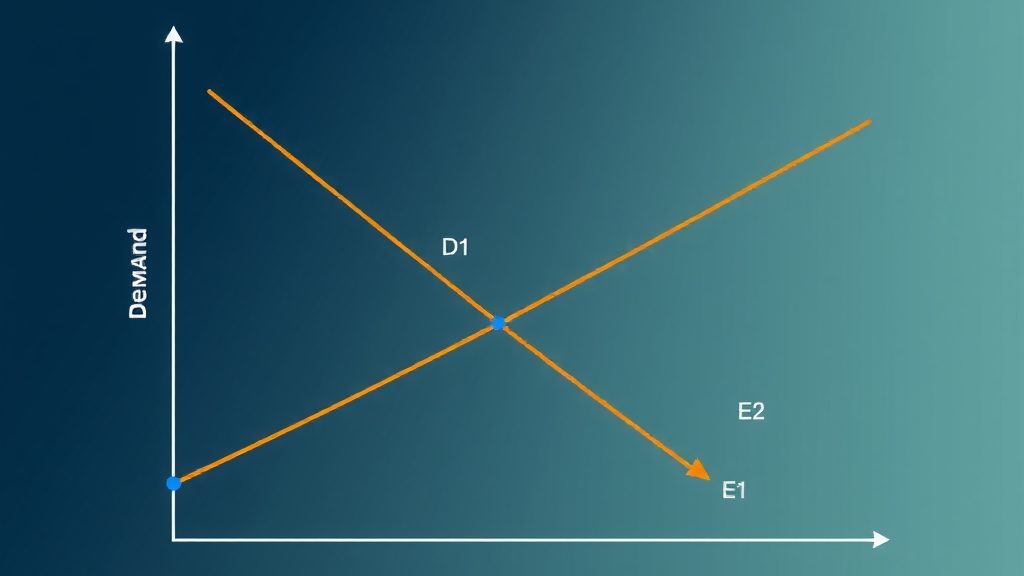
IPWatchdog has published a new analysis examining the Entire Market Value Rule (EMVR) through an economic framework, arguing that the rule's most challenging aspects stem from application rather than articulation. The article notes that terms like 'basis for customer demand' and 'driver of demand'—central to EMVR inquiries—are not inherently legal constructs but implicate economic questions about consumer choice and value attribution in multi-component products.
The Federal Circuit has repeatedly emphasized tying damages to the value of the patented invention, yet courts have articulated the EMVR exception in several ways. These include Rite-Hite's 'basis for customer demand' standard, LaserDynamics' 'drives demand for the entire product' formulation, and Power Integrations' more stringent 'sole driver of customer demand' test. The analysis highlights that these standards are conceptually distinct: a feature that 'drives demand' economically means any non-price factor shifting the demand curve, while 'basis' or 'sole driver' implies a far more demanding condition.
From an economic perspective, a 'driver of demand' is any non-price factor—such as product features, consumer income, or prices of substitutes—that shifts the demand curve. If consumers value and are willing to pay for a particular feature, that feature influences the demand curve and qualifies as a driver. The analysis contrasts this with the 'sole driver' interpretation suggested in Power Integrations, which would require the patented feature to be the only reason consumers buy the product—a condition rarely met in practice for multi-feature products.
The article illustrates the economic framework using a smartphone example: if a patented camera feature is removed, the demand curve shifts downward. At the original price, market equilibrium no longer exists, and a profit-maximizing firm would lower prices to partially offset decreased demand. This supply-and-demand modeling demonstrates how economic principles can clarify whether a patented feature constitutes the 'sole driver' by testing whether demand collapses to zero in its absence.
The analysis underscores that the Federal Circuit's repeated citation of the law of demand—as noted in Crystal Semiconductor—signals recognition that patent damages must respect economic realities. By applying established economic principles to the 'driver of demand' inquiry, the article suggests a more rigorous and consistent framework for EMVR application in patent litigation.