

GLP-1 Receptor Agonists: The Science, Patent Strategy, and the Future of Metabolic Therapeutics

Introduction: A Drug Class That Redefined an Industry
Very few pharmaceutical innovations have managed to simultaneously reshape clinical practice, redefine commercial markets, and establish new benchmarks in intellectual property strategy. GLP-1 receptor agonists are one such rare class.
Initially developed for Type 2 diabetes, these drugs have rapidly expanded into obesity management and are now being explored across cardiovascular, renal, hepatic, and neurological indications. What appears to be a straightforward therapeutic success is, in reality, a layered story of molecular engineering, clinical validation, and highly strategic patent architecture.
Understanding GLP-1 drugs therefore requires looking beyond efficacy and into the intersection of biology, chemistry, and intellectual property.
The Biological Foundation: Why GLP-1 Became a Target
GLP-1, or glucagon-like peptide-1, is an incretin hormone secreted by intestinal L-cells following food intake. It acts as a metabolic regulator, enhancing glucose-dependent insulin secretion, meaning insulin release is stimulated only when blood glucose levels are elevated, thereby reducing the risk of hypoglycemia. At the same time, it slows gastric emptying and influences appetite through central nervous system pathways.
This combination of effects creates a powerful therapeutic profile, simultaneously addressing glycemic control and energy balance. However, native GLP-1 is rapidly degraded by DPP-4, resulting in a half-life of only a few minutes. This instability made it unsuitable as a direct therapeutic agent and necessitated structural redesign.
Endogenous GLP-1 primarily exists in two biologically active forms—GLP-1 (7–36 amide) and GLP-1 (7–37)—both of which contribute to its physiological effects.
Molecular Engineering: Precision at the Peptide Level
The transformation of GLP-1 into a viable drug class required targeted modifications that preserved biological activity while dramatically improving stability.
At the molecular level, specific amino acid positions became focal points for innovation. Substitution at position 8 prevents DPP-4 cleavage, while modifications at position 26 enable lipidation, allowing the molecule to bind to albumin and remain in circulation for extended periods. Position 34 contributes to maintaining structural integrity.
This design logic is best understood through comparative molecular strategies.
Table 1: Structural Engineering Across GLP-1 Analogs
| Molecule | Key Modification | Functional Outcome | Clinical Impact |
|---|---|---|---|
| Exenatide | Natural peptide analog | Partial DPP-4 resistance | Short-acting |
| Liraglutide | C16 fatty acid at Lys26 | Albumin binding | Once-daily dosing |
| Dulaglutide | Fc fusion protein | Large molecular size | Once-weekly dosing |
| Semaglutide | C18 fatty diacid + AA substitution | Strong albumin binding + stability | Once-weekly + high efficacy |
Semaglutide represents a particularly refined design, combining enzymatic resistance with enhanced pharmacokinetics. This enables sustained receptor activation and superior clinical outcomes.
Evolution of the GLP-1 Class: From Concept to Dominance
The trajectory of GLP-1 drugs reflects a progression of solving fundamental limitations step by step. Early discoveries around the incretin effect established the biological basis, but the first practical therapeutic, exenatide, still faced dosing and stability challenges.
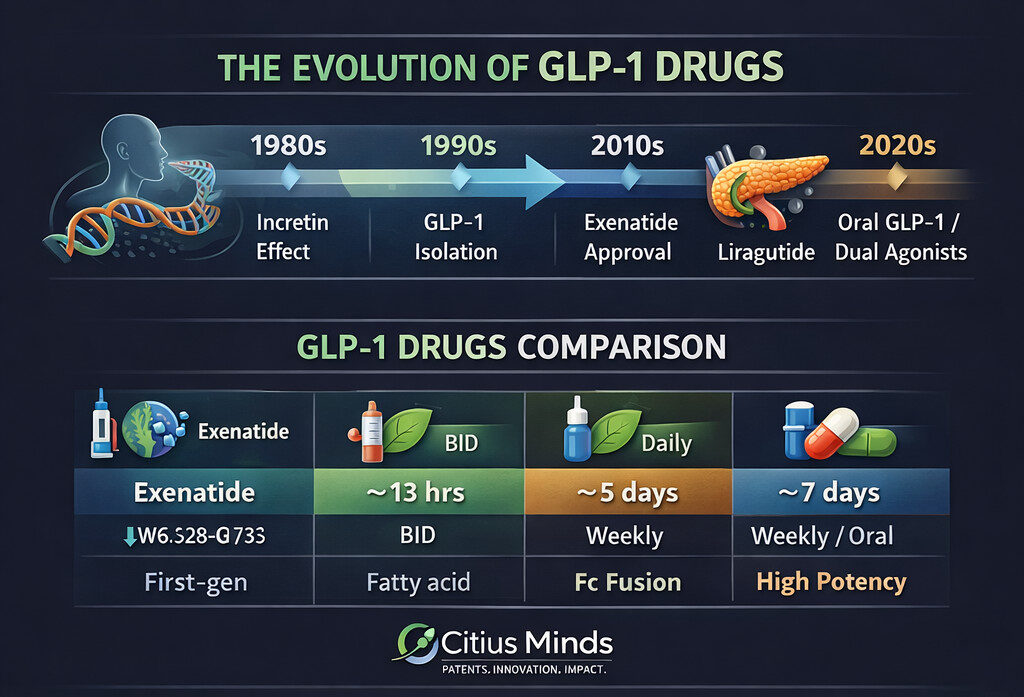
The introduction of lipidated analogs such as liraglutide improved pharmacokinetics and patient compliance. However, it was the emergence of long-acting agents like semaglutide that marked a turning point, delivering both convenience and superior efficacy.
Table 2: Evolution of GLP-1 Therapies
| Generation | Representative Drug | Key Limitation Solved | Remaining Gap |
|---|---|---|---|
| First | Exenatide | Initial therapeutic feasibility | Frequent dosing |
| Second | Liraglutide | Improved half-life | Daily injections |
| Third | Semaglutide | Weekly dosing + superior efficacy | Injectable format |
| Current | Dual/Triple agonists | Enhanced metabolic outcomes | Long-term data |
This progression highlights how incremental innovations in peptide engineering translate into major clinical and commercial shifts.
Clinical Validation: Multi-Dimensional Therapeutic Impact
GLP-1 receptor agonists are not defined by a single endpoint but by their ability to deliver across multiple clinical outcomes simultaneously.
Unlike many traditional antidiabetic therapies, GLP-1 receptor agonists exhibit a low intrinsic risk of hypoglycemia due to their glucose-dependent mechanism of action.
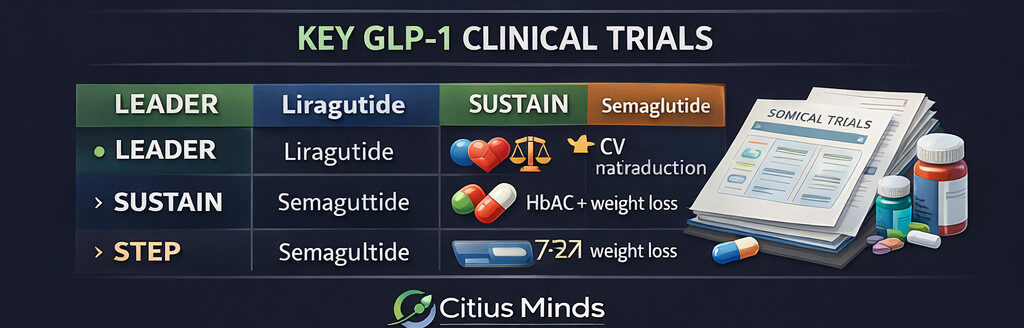
Large-scale trials such as LEADER, SUSTAIN, and STEP have consistently demonstrated improvements in glycemic control, significant weight reduction, and reductions in cardiovascular risk. This convergence of benefits distinguishes GLP-1 drugs from earlier therapeutic classes.
Table 3: Clinical Performance Across Key Trials
| Trial | Drug | Primary Outcome | Key Finding |
|---|---|---|---|
| LEADER | Liraglutide | Cardiovascular outcomes | Reduced MACE risk |
| SUSTAIN | Semaglutide | Glycemic control | Superior HbA1c reduction |
| STEP | Semaglutide | Obesity | up to ~15% weight loss in clinical trials |
The ability to simultaneously address diabetes, obesity, and cardiovascular risk has redefined treatment paradigms.
Patent Landscape: A Layered Exclusivity Strategy
The GLP-1 patent ecosystem is one of the most sophisticated examples of lifecycle management in modern pharmaceuticals. Rather than relying solely on composition patents, companies have built multi-layered protection strategies.
Representative GLP-1-related patents include US9764003B2, US10335462B2, and US10676465B2 establish foundational protection for modified peptide sequences.
However, the real strength of the portfolio lies in secondary patents.
Table 4: Key Patent Categories in GLP-1 Landscape
| Patent Category | Representative Patent | Strategic Role |
|---|---|---|
| Composition | US9764003B2 | Molecule protection |
| Formulation | US11318191B2 | Stability + shelf life |
| Stability | US10888605B2 | Prevent degradation |
| Platform | WO2006097537A3 | Enable lipidation |
| Process | WO2021105393A1 | Manufacturing control |
| Formulation | WO2020208541A1 | Delivery optimization |
Each layer reinforces the others, creating a dense and difficult-to-navigate patent thicket.
Semaglutide: A Case Study in Patent Layering
Semaglutide’s success is not only due to molecular design but also to how effectively it is protected.
Patents such as US11318191B2 focus on formulation nuances, including excipient systems and stability parameters. Meanwhile, US10888605B2 addresses degradation pathways and storage conditions.
These patents ensure that even if competitors replicate the peptide sequence, they still face significant barriers in developing commercially viable products.
Biosimilars: The Illusion of Imminent Competition
While patent expirations often signal generic entry, GLP-1 drugs present a more complex scenario.
Peptide synthesis introduces variability that must be tightly controlled, and regulatory pathways require demonstration of structural and functional equivalence. Beyond this, secondary patents covering formulations and delivery devices continue to extend exclusivity.
Table 5: Barriers to GLP-1 Biosimilar Entry
| Barrier Type | Description | Impact |
|---|---|---|
| Molecular complexity | Peptide synthesis variability | High development cost |
| Regulatory | Strict comparability requirements | Longer timelines |
| Device patents | Injection systems protected | Entry delay |
| Patent thicket | Overlapping claims | Litigation risk |
As a result, biosimilar entry is likely to be gradual rather than disruptive.
Next-Generation Therapies: Moving Beyond GLP-1
The next wave of innovation is focused on multi-receptor targeting, reflecting a broader shift toward systems-level metabolic regulation.
Dual agonists targeting GLP-1 and GIP have already demonstrated superior outcomes in weight loss. Triple agonists incorporating glucagon signaling are now under development, as evidenced by patents such as WO2025114501A1.
Table 6: Emerging GLP-1-Based Therapeutic Strategies
| Approach | Mechanism | Expected Advantage |
|---|---|---|
| GLP-1 + GIP | Dual incretin activation | Enhanced weight loss |
| GLP-1 + Glucagon | Energy expenditure modulation | Improved metabolic balance |
| Triple agonists | Multi-pathway targeting | Maximum efficacy |
| Oral GLP-1 | Absorption enhancers | Improved compliance |
These formulations rely on absorption enhancers such as SNAC (sodium N-[8-(2-hydroxybenzoyl) amino] caprylate), which facilitates gastric uptake of the peptide by protecting it from degradation and improving transcellular absorption.
This evolution suggests that the current generation of GLP-1 drugs may soon be surpassed by more advanced metabolic therapies.
Market Dynamics: Growth, Pressure, and Competition
The commercial expansion of GLP-1 drugs has been unprecedented. Demand driven by obesity treatment has pushed these drugs into blockbuster territory, with revenues reaching tens of billions globally.
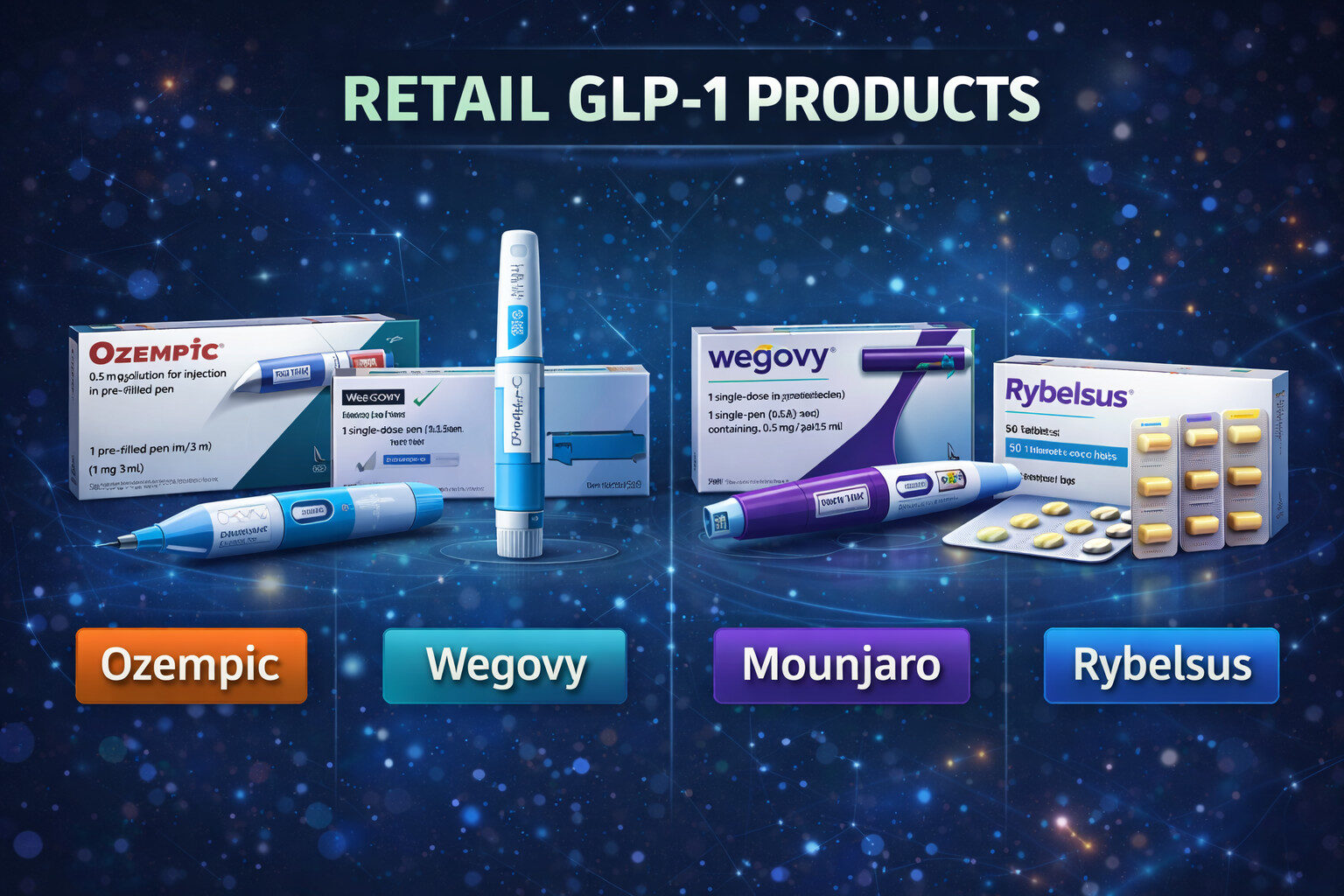
However, this success has introduced new challenges. Pricing pressures are intensifying, supply constraints remain persistent, and off-label use has raised ethical and regulatory concerns. As more competitors enter the market, these dynamics will become increasingly complex.
Strategic Outlook: Where Science Meets IP
The future of GLP-1 therapeutics will be shaped by both scientific and strategic factors. New indications will expand the addressable market, while advances in drug design will continue to improve efficacy and convenience.
At the same time, the eventual expiration of key patents will open the door to biosimilars, fundamentally altering market dynamics. Companies that succeed in this transition will be those that can extend their innovation pipelines while effectively managing lifecycle strategies.
Conclusion: A Blueprint for Modern Pharma
GLP-1 receptor agonists represent far more than a successful drug class. They illustrate how deep biological insight, precise molecular engineering, and strategic intellectual property management can converge to create sustained competitive advantage.
As the field continues to evolve, GLP-1 will remain a reference point—not just for metabolic therapeutics, but for how modern pharmaceutical innovation is executed.
References
- US9764003B2 – Long-acting GLP-1 peptides
- US10335462B2 – GLP-1 dosage regimens
- US10676465B2 – GLP-1 receptor agonists
- US11318191B2 – Semaglutide compositions
- US10888605B2 – Stability formulations
- WO2021105393A1 – GLP-1 purification processes
- WO2020208541A1 – GLP-1 liquid formulations
- WO2006097537A3 – Acylated GLP-1 analogs
- WO2025114501A1 – Multi-agonist peptides
- Clinical trials: LEADER, SUSTAIN, STEP
- Peer-reviewed GLP-1 pharmacology and patent landscape literature