
 Intellectual property news
AI Mining Collaborations Raise Thorny Inventorship Questions Across Jurisdictions
As mining firms partner with tech providers on AI systems, legal tests for who qualifies as an inventor differ by country and may leave patent rights uncertain.
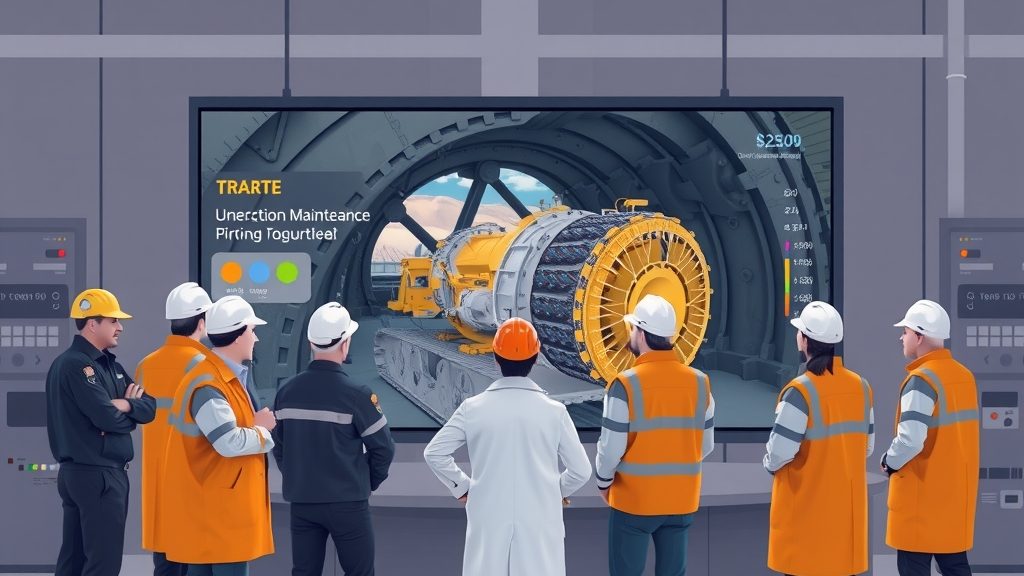
Mining companies are accelerating investments in artificial intelligence, with technology spending projected to rise more than 25% by the end of 2026. Predictive maintenance, real-time safety monitoring, and faster geological analysis are already delivering measurable value, according to a 2026 PwC and Minerals Council South Africa study and complementary Accenture research on digital twins and industrial IoT.
A typical collaboration might involve a mining house providing years of equipment data, a technology firm contributing machine-learning algorithms, and engineers training and optimizing the system daily. The resulting innovation often cannot be traced to a single party, yet patent law demands a clear answer: who devised the inventive concept?
In South Africa and the United Kingdom, courts apply a two-step test: identify the inventive concept, then determine who conceived it. Australian decisions weigh whether a contribution had a "material effect" on the solution and whether the invention would have materialized without it. The United States follows a similar conception-and-reduction-to-practice framework focused on the claimed invention.
Not every participant qualifies. Supervisors, technicians following instructions, and those merely documenting results are not inventors. The distinction between conception and execution is especially blurred when mining engineers and AI developers work side by side, making rigorous contribution records essential.
The role of AI itself adds another layer. South Africa granted a patent naming an AI as inventor, but its courts have not reviewed that decision. The UK, EU, Australia, and US all require a natural person as inventor. The US Patent Office has clarified that AI assistance does not bar patentability if a human meets the inventorship standard, though inventions created entirely by AI remain unpatentable.
References
- Who owns the IP in AI-led mining collaborations? Bizcommunity