
 Intellectual property news
Physician Inventors Face Steep Legal Hurdles Turning Bedside Failures into Patents
Editorial analysis finds most doctors with device improvement ideas fail to protect them, risking loss of patent rights through early disclosure.
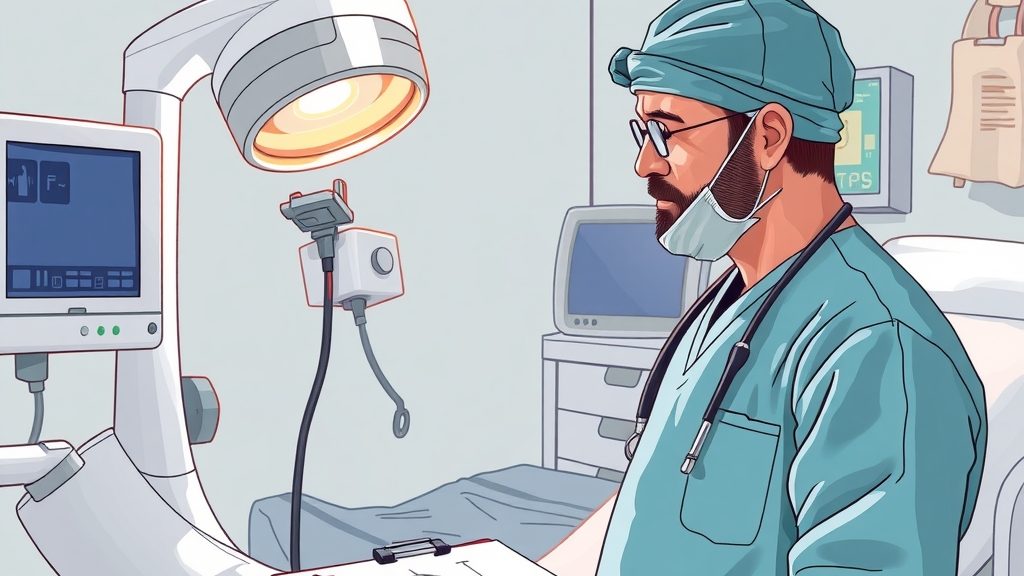
Physicians who repeatedly see medical devices and treatments fail at the bedside are uniquely positioned to invent better solutions, but few navigate the legal steps needed to protect those ideas. That is the conclusion of an editorial analysis by legal and medical researchers Anton J. Hopen, Paul R. Sanberg, and Kimberly B. Bjugstad, published in Bioengineer. The authors argue that frontline clinicians observe failure modes — anatomical mismatches, workflow breakdowns, erratic therapy performance — that population-based research often misses, making their insights valuable starting points for patentable inventions.
Historical data supports the link between practice and innovation. Between 1990 and 1996, physicians were listed as inventors on nearly 20% of roughly 26,000 U.S. medical device patents, and those patents exerted outsized influence on subsequent technology. Yet a cited international survey, primarily of European doctors, reveals a sharp drop-off between recognizing a problem and securing rights. While 71% of respondents reported frustration with existing devices and about two-thirds had concrete improvement ideas, only 20% had consulted their institution's technology transfer office.
The analysis highlights risky disclosure habits. Fifty-nine percent of surveyed physicians took no precautions to protect their intellectual property, and 54% discussed technical concepts with industry contacts before filing any patent application. Under U.S. law (35 U.S.C. § 102), any public disclosure starts a strict one-year grace period to file in the United States, but it immediately destroys patent eligibility in most other countries, which require absolute novelty. The authors warn that treating a conference talk or casual industry conversation as harmless feedback can permanently forfeit global rights.
A granted patent differs fundamentally from a peer-reviewed paper, the authors emphasize. A journal article enters the public domain as prior art that examiners can cite against future applications — including the authors' own. A patent, by contrast, is a government-vetted legal instrument confirming that an invention meets statutory requirements for novelty, nonobviousness, written description, enablement, and subject-matter eligibility. That status creates an enforceable asset capable of attracting investment and enabling commercialization.
Patent prosecution is described as a structured, semi-adversarial administrative process governed by the Manual of Patent Examining Procedure. Examiners apply the broadest reasonable interpretation to claims and must reject them when prior art supports unpatentability. Unlike peer review, where authors can revise prose, overcoming a rejection demands concrete claim amendments or evidentiary rebuttals — a rigorous standard that physician-inventors must be prepared to meet.
References
- BIOENGINEER BIOENGINEER
- Physicians Translating Clinical Failure Modes Into Patents Face Rigorous Legal Standards Bioengineer.org